Rhode: From Scarcity to Scale, How Rhode Became a Billion-Dollar Cultural Powerhouse
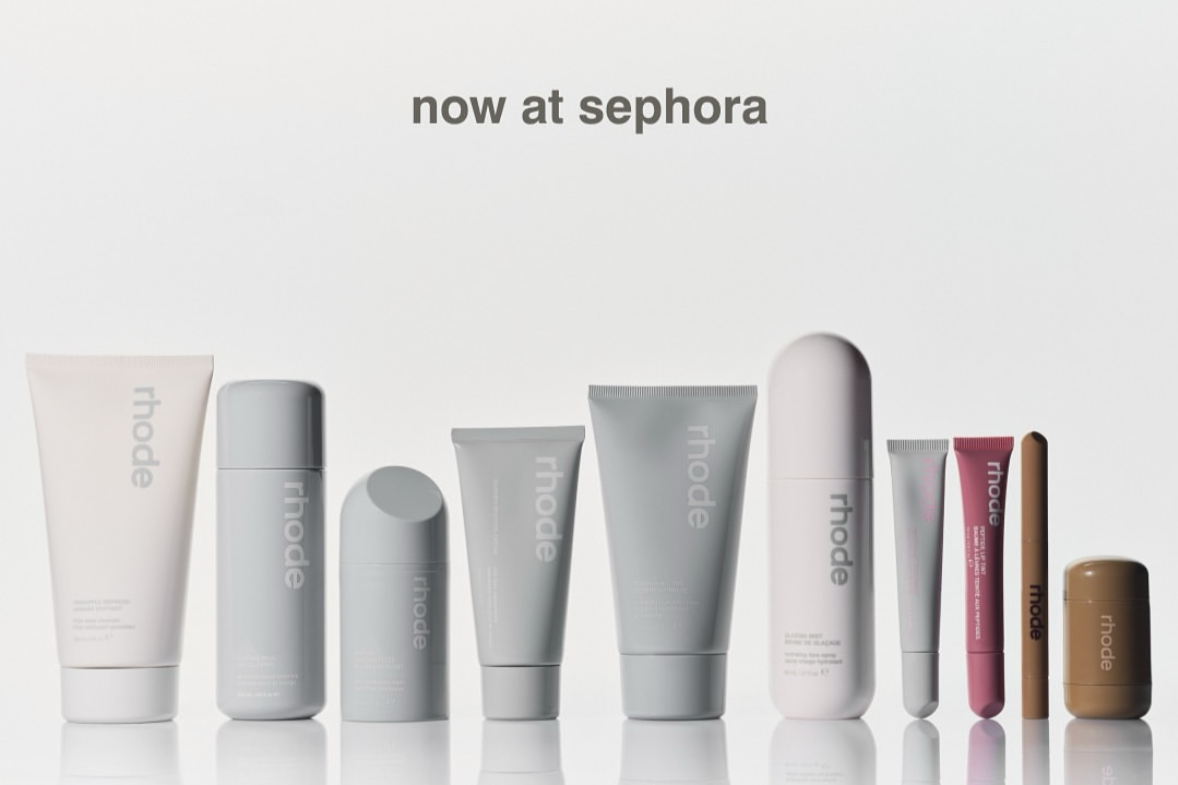
Photo courtesy of @rhode & @sephora on Instagram
When Rhode launched in 2022, it entered an oversaturated beauty market; yet within days, it sold out. Built on authenticity, scarcity, and cultural timing, Hailey Bieber’s minimalist brand turned “glazed donut skin” into a movement.
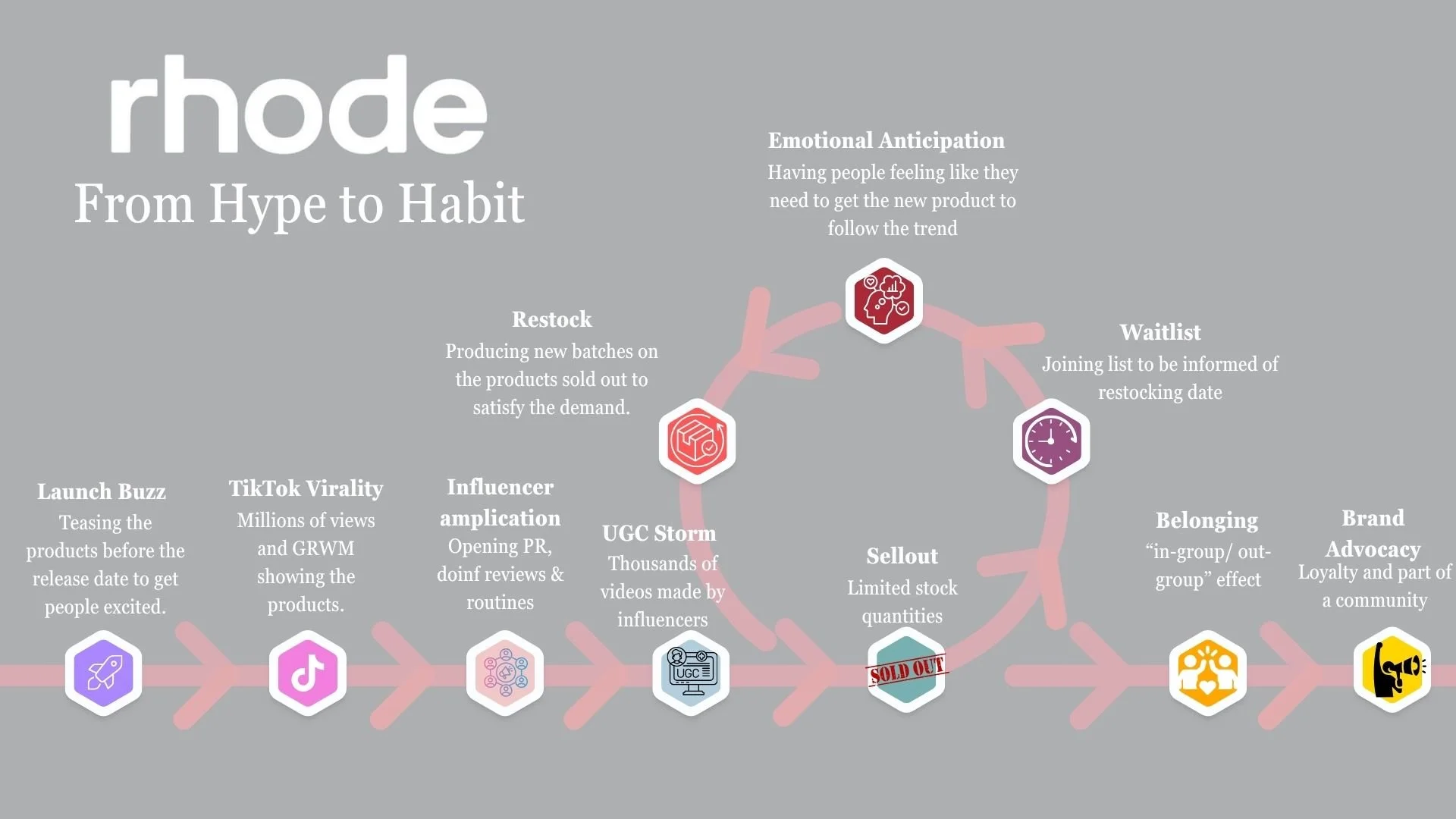
Rhode didn’t flood the market with endless SKUs; it started with three essentials, transforming limited drops into desire and waitlists into social proof. Its Scarcity Flywheel model (limited supply → amplified demand → cultural momentum) became the foundation of modern beauty marketing.
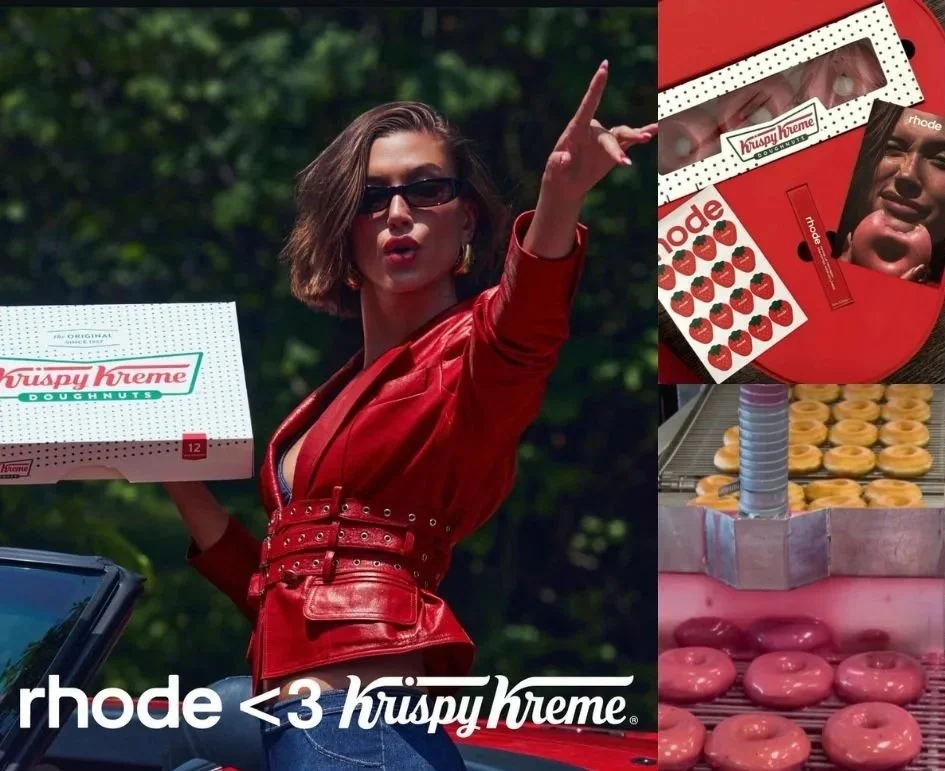
Photos courtesy of @rhode on Instagram
Through clever collaborations like Krispy Kreme and immersive pop-ups that felt more like lifestyle events than product launches, Rhode blurred the line between skincare and culture. The result: viral traction, a 367% YoY growth in Earned Media Value, and a $1B acquisition by e.l.f. Beauty.
Rhode’s rise shows how clarity, restraint, and authenticity can outshine even the loudest celebrity brands.
-> Download the full case study to explore strategy frameworks, metrics, and brand lessons.
