From Spreadsheets to Sitcoms: How Ramp Used Humor to Humanize Finance
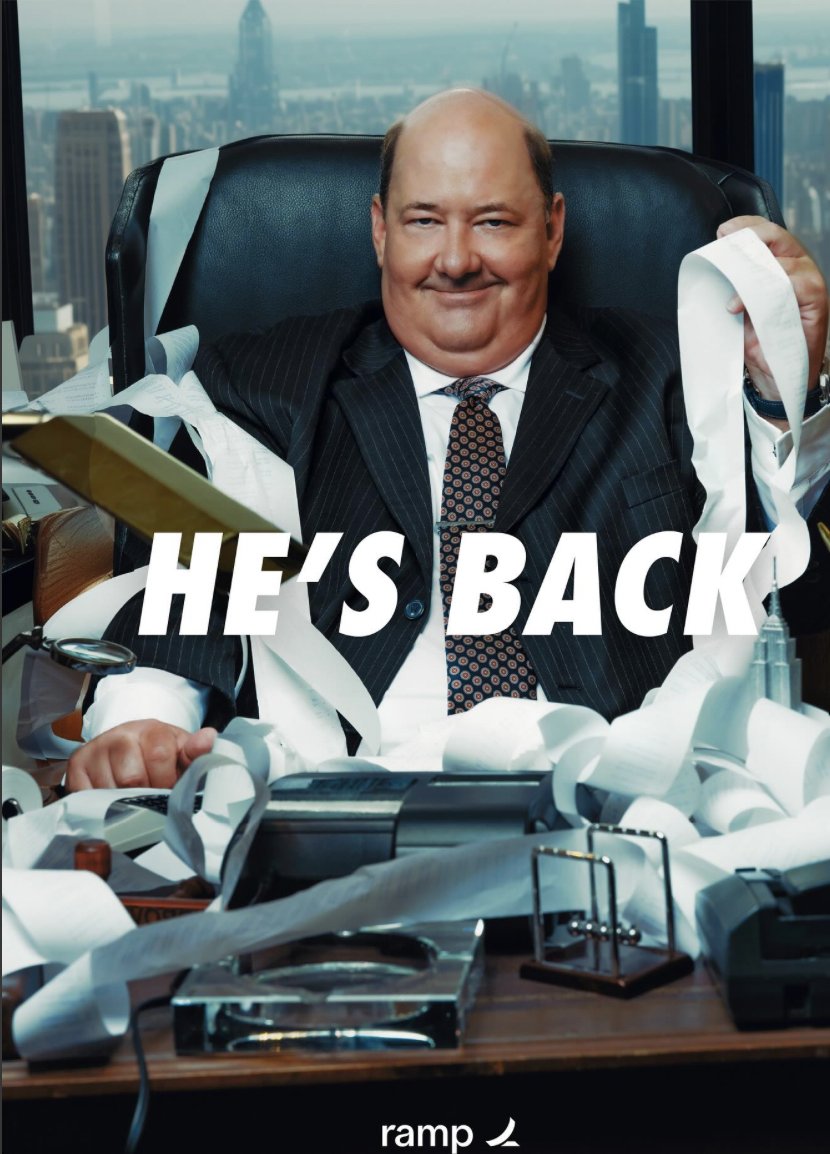
Photos courtesy of @comingofageco on Instagram
When B2B brands borrow from Hollywood, relatability becomes a strategy, but not without risks.
Fintech has turned into a war of features, dashboards, and similar buzzwords. In an environment where each brand guarantees "automation," "efficiency," and "control," emotional storytelling is nearly absent. That is the precise reason Ramp's campaign was so special. Financial operations platform Ramp appointed Kevin Malone, the notoriously incompetent accountant from The Office, as its new CFO and treated the stunt as a large-scale cultural event, thus breaking the B2B mould. What could have been a mere nostalgia gimmick turned into a strategic masterclass of humour, cultural understanding, and cross-channel storytelling. What follows is the short-form website version. The complete analysis can be downloaded at the end.
Why Ramp’s Strategy Worked
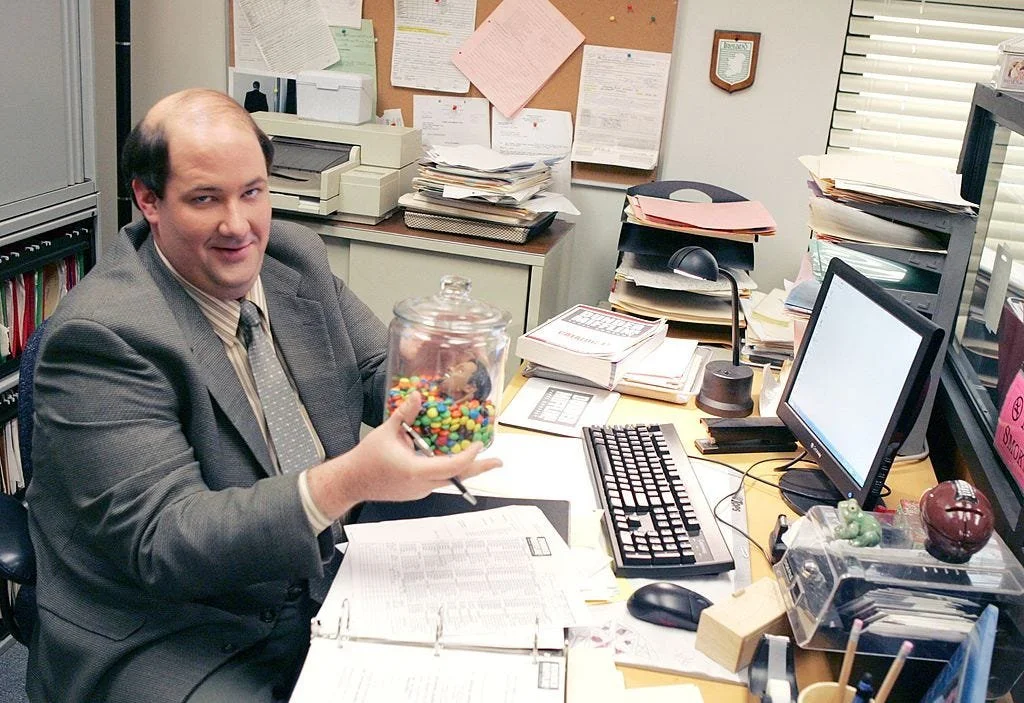
Brian Baumgartner is known for playing the role of Kevin Malone in The Office. Credit: Getty Images / Chris Haston / NBCU Photo Bank
A majority of the fintech brands, while others applied hyper-targeted, optimised metrics, ads that felt the same way. Ramp, on the other hand, perceived that the audience's weariness was not because of the product category, but rather the communication style. So the brand resolved to take a turn towards cultural relevance instead of pure reach. Turning to Hollywood, leaning into a favourite character, and making a story out of the ''wastefulness'' of the process, Ramp connected emotionally with a professional segment, usually not portrayed as human: the finance professionals. Surely this was the right gamble; Nostalgia and celebrity can quickly outshine the essence of the story, but in this case, it illuminated the metaphor: Kevin = old-fashioned expense processes, Ramp = the better option
Execution: The IRL → Social Flywheel
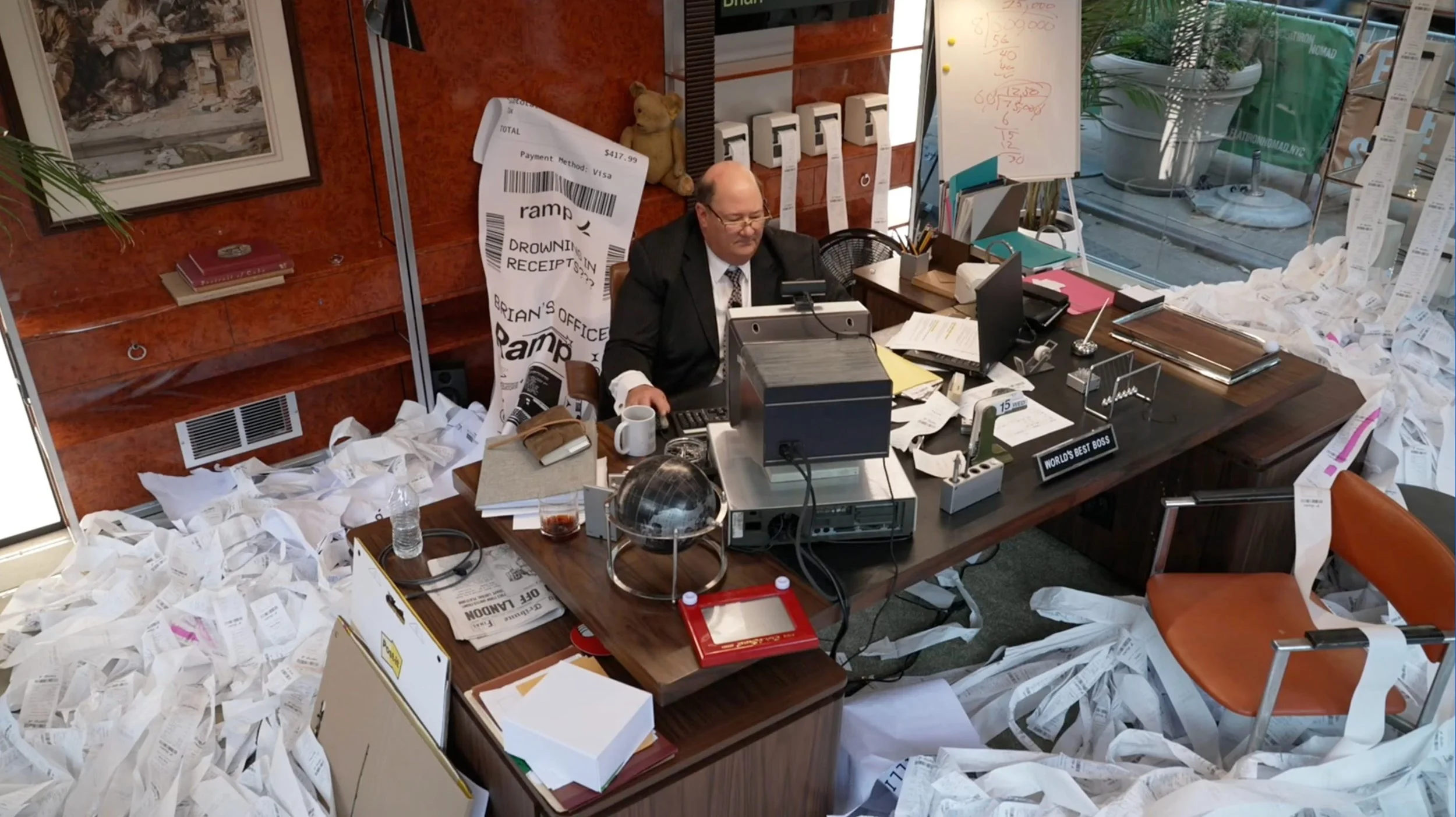
A screenshot from Ramp Livestream
Ramp did not merely conduct a campaign — it created a whole experience. Actor Brian Baumgartner, in the center of Flatiron plaza, spent eight hours working inside a transparent glass box, processing receipts by hand, while Ramp's automated workflow software worked faster than him in real time. The people around, took video, reacted, and posted, thus creating millions of organic impressions nearly. The Livestreams across TikTok, YouTube and X turned the stunt into an internet event. Guest appearances (The Rizzler, Packy McCormick, and even a wedding officiated by Kevin) turned the activation into a streamer-style variety show. What was hidden behind the humour was very thorough planning: -> narrative primers -> teaser videos -> nostalgic microsite with built-in demo sign-ups, -> clip-farming strategy optimised for TikTok and Reels. What happened as a result? A case study in engineered virality, not accidental hype.

Impact & Insights
Ramp's stunt was the source of 112M+ views, the creation of thousands of user-generated content (UGC) clips, and the attraction of massive media coverage - but the biggest outcome was the change of mind. Ramp changed its identity from "just another SaaS tool" to a brand that is informed by the culture and is emotionally intelligent. Most importantly, the whole thing showed that:
-> B2B doesn't have to be dull -> Humour can make clear rather than obscure -> Live events can give digital a huge boost -> Imagination and understanding of the culture still are the best barriers in a market that is swamped with AI.
Unfortunately, creating virality also raises the bar: Ramp has to keep up this style and narrative discipline in order not to fall into the trap of “one-hit wonder”.
-> Want the full PDF case study with visual breakdowns and collab comparisons?
{Download Here}
