The €30 Prada: Why Luxury Houses Are Selling You Coffee Instead of Bags
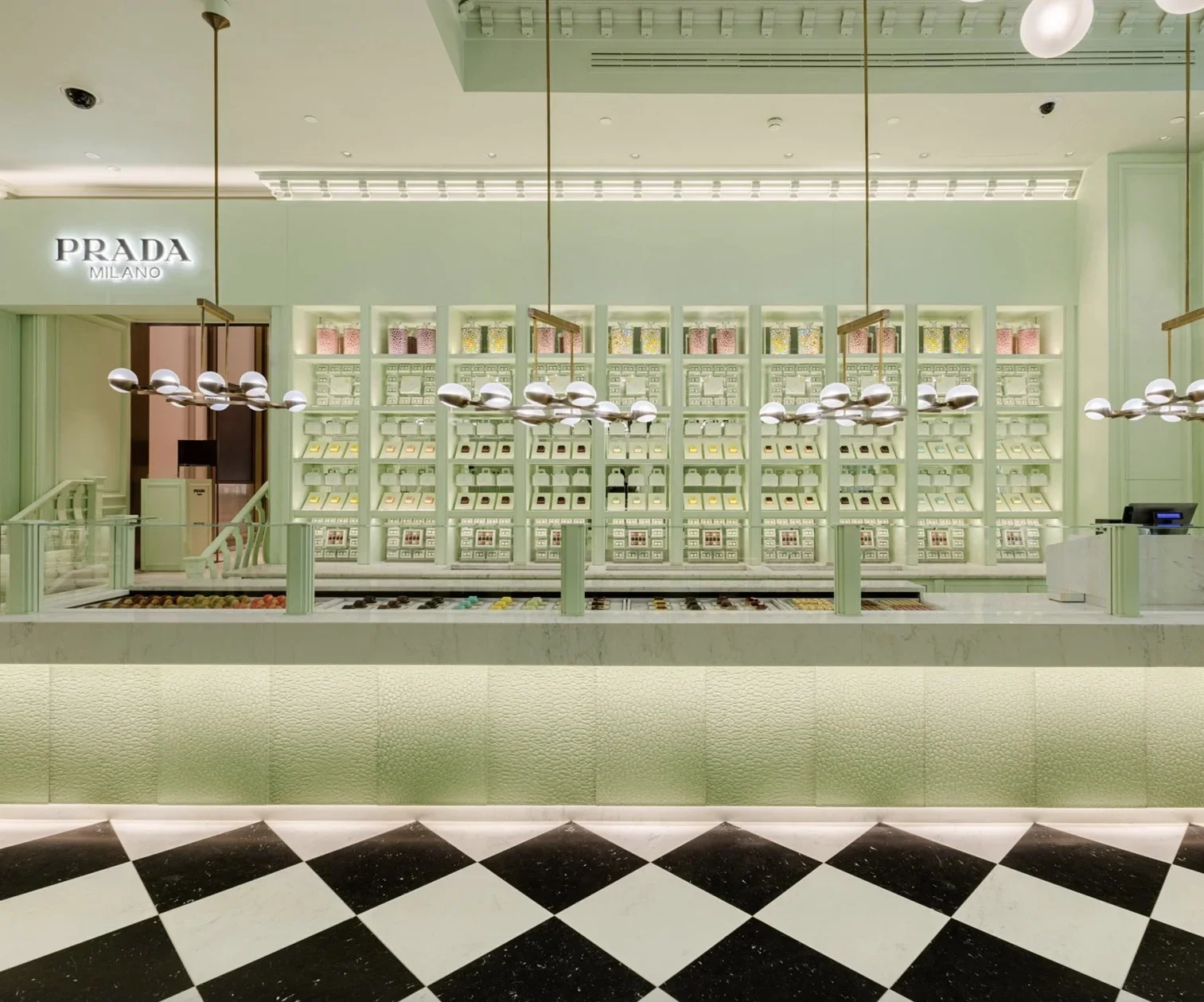
Picture from Galavante.com
Fashion houses are turning into restaurateurs, and the queues are long. Behind the monogrammed pastries is a much bigger story about the customers' lost luxury.
What's happening
Luxury fashion brands are opening cafés at an unprecedented pace. Louis Vuitton now runs more than 20 cafés, restaurants and chocolate shops worldwide. In September it moved its Paris café, run by Maxime Frédéric, named the world's best pastry chef in 2025, to a new address facing the Seine. Its New York café takes bookings 28 days in advance. Prada has cafés in London and Singapore and is planning one in New York's SoHo. Armani opened a café next to its Hamburg boutique in August, and Gucci has run restaurants with chef Massimo Bottura for years.
The menus are made for the camera: pastries stamped with logos, chocolates in the house's colours, even monogrammed ice-cream cones. Social media does the rest.
Why now: luxury lost its middle
The brands talk about "hospitality" and "brand universe." The numbers tell a simpler story.
According to consultancy Bain and Italian luxury association Altagamma, the number of luxury consumers fell from about 400 million in 2022 to around 340 million in 2025. That is roughly 60 million people in three years. Most were "aspirational" buyers: people on good salaries who used to stretch for a bag or a pair of shoes once or twice a year.
They left because prices rose much faster than costs, while products did not feel more special. Bain's research shows these shoppers did not stop wanting luxury. They moved to smaller treats and experiences instead. A €12 pastry in a Louis Vuitton box is both.
The café is the new entry product
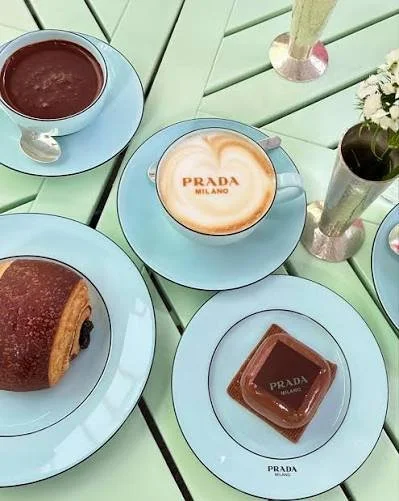
Picture courtesy of @saachi.bhasin on Instagram
Every luxury house needs an entry product: something that lets you "buy into" the brand before you can afford its core. For decades that was a lipstick, a perfume or a logo T-shirt. As those became expensive too, the café took their place. In Paris, coffee and pastries for two at Louis Vuitton cost about €59; a bag costs thousands.
The problem: content is not customers
As marketing, cafés work brilliantly. Every guest films their visit, and every queue is free advertising.
But there is a catch. A lipstick stays in your bag for months and reminds you of the brand every day. A pastry lasts ten minutes, and what remains is a photo on Instagram. Unless the brand collects guests' details, invites them back and turns a coffee into a first purchase, the café is simply a very beautiful marketing cost. Restaurants are also low-margin businesses operating in some of the most valuable retail space in the world.
There is a brand risk too. Luxury has always relied on distance: you had to earn your way in. If most young people only ever experience a brand through its café, they may decide the photo was enough.
Our verdict
The luxury café is one of the smartest moves the industry has made in years, and one of the most revealing. It brings lost customers back through the door, but it does not fix the prices that pushed them out. The winners will treat the coffee as the first chapter of a relationship. The rest will have built the world's most beautiful waiting room for customers who never reach the boutique.
